

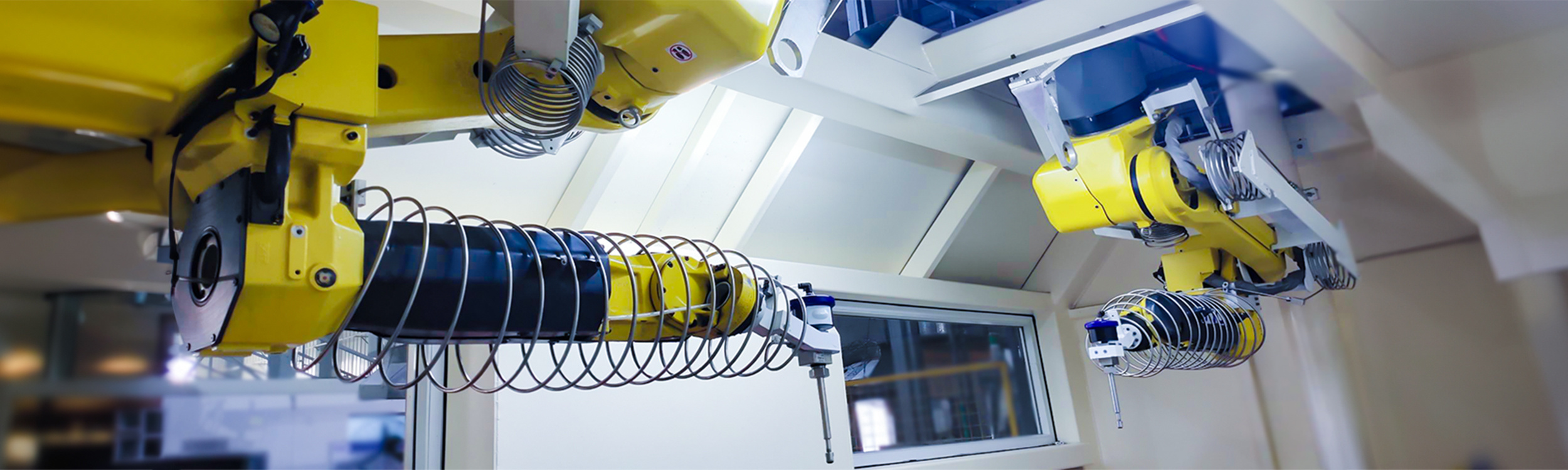
5‑Axis Sawjet Cutting Machine
Cutting Platform 3220 WATERJET/SAWJET 5A — Cutting Platform Specifications
| Effective Cutting Travel | X-axis: 3200mm, Y-axis: 2000mm, Z-axis: 200mm |
| Waterjet Cutting Head Angle | C-axis: 360°, A-axis: ±75° |
| Abrasive Saw Cutting Head Angle | C-axis: 360°, A-axis: 45° |
| Control Accuracy | ±0.01mm |
| Repeat Positioning Accuracy | ±0.01mm |
| Cutting Accuracy | ±0.1mm |
| Cutting Speed | 0.8-3 m/min |
| Spindle Speed | 3000-6000 rpm |
| Milling Cutter Speed | 18000 rpm |
| Structure | Oil-immersed guide rail |
| Overall Dimensions | 6100×3700×3500 mm |
| Saw Blade Diameter | 350-450 mm |
How CNC Sawjet Cuts Stone – The Hybrid Process
A CNC Sawjet does not use saw and waterjet simultaneously. Instead, it uses a smart, automated sequence where the machine selects the optimal cutting mode for each segment of the part geometry. Here's how it works step by step:
1. The Saw Blade – High‑Speed Rough Cutting
What it does: The diamond‑tipped circular saw blade (typically 16–24 inches in diameter) spins at high RPM and cuts through stone via abrasive friction – literally grinding a kerf (slot) through the material.
When it's used:
-
Straight lines (perimeter edges of countertops)
-
Large‑radius arcs (over 2–3 inches radius)
-
Bevels and chamfers (using tiltable saw head)
-
Deep cuts (up to 4–6 inches thick)
-
Roughing passes – removing bulk material quickly
Why it's preferred: The saw cuts 5–10× faster than waterjet, with zero abrasive cost. It's the "workhorse" for all non‑complex geometry.
2. The Waterjet – Precision Finishing & Complex Shapes
What it does: An ultra‑high‑pressure pump (up to 60,000 PSI) forces water through a tiny orifice (0.010–0.014 inches), creating a supersonic stream. Abrasive garnet is then injected into the stream, and this abrasive‑laden jet erodes the stone material particle by particle – a cold, stress‑free cutting process.
When it's used:
-
Tight internal corners (e.g., square sink cutouts – the saw blade can't cut a sharp 90° corner due to its circular shape)
-
Small radii (under 2 inches)
-
Intricate curves and scrollwork
-
Lettering, logos, and inlay patterns
-
Piercing / starting holes – the waterjet can pierce the slab without needing a pre‑drilled hole
-
Thin or brittle materials (porcelain, sintered stone) where saw vibration causes chipping
Why it's preferred: It delivers ±0.005" accuracy, a smooth (120–150 grit) finish, and zero heat‑affected zone – no micro‑cracks or discoloration.
3. How They Coordinate – The Workflow Sequence
The machine's CNC controller runs a single program (generated from CAD/CAM software) that contains both saw and waterjet toolpaths. Here's a typical cutting sequence for a kitchen countertop:
| Step | Operation | Tool Used | Purpose |
|---|---|---|---|
| 1 | Outline rough cut | Saw blade | Cut the main rectangular slab perimeter at high speed |
| 2 | Sink hole perimeter | Saw blade | Cut the straight edges of the sink opening (where possible) |
| 3 | Sink corners | Waterjet | Cut the 4 sharp corners of the sink hole – the saw can't reach them |
| 4 | Faucet hole | Waterjet | Pierce and cut a small, precise round hole |
| 5 | Edge profiling / miter | Saw blade (tilted) | Cut a 45° bevel on the front edge for seamless seaming |
| 6 | Final cleanup pass | Waterjet (optional) | Trim any remaining tight details |
Critical automation features that enable smooth coordination:
-
Automatic tool change – The machine switches between saw and waterjet heads without operator intervention.
-
Height sensors – The waterjet nozzle automatically adjusts its standoff distance (typically 0.060–0.080 inches above the stone) to maintain consistent cutting quality, even if the slab is warped.
-
Pierce logic – Before waterjet cutting, the machine performs a short "pierce cycle" (drilling through the stone) at a reduced feed rate, then ramps up to full cutting speed.
-
Lead‑in / lead‑out paths – The waterjet approaches and exits cuts tangentially to avoid leaving a notch or mark at the entry point.
-
Nesting software – The CAM program optimizes the order of cuts to minimize tool changes and slab movement, often grouping all saw cuts first, then all waterjet cuts, to reduce cycle time.
4. The "Intelligent" Decision – Why Not Just Use Waterjet for Everything?
| Factor | Saw Blade | Waterjet |
|---|---|---|
| Cutting speed (straight line) | ~200–400 IPM (inches per minute) | ~20–40 IPM |
| Abrasive cost | $0 (only blade wear) | ~$0.15–0.30 per sq. ft. |
| Corner radius capability | Limited to blade diameter (~2" min radius) | Unlimited – cuts any shape |
| Edge finish | Rougher – requires polishing | Smoother – minimal finishing |
The bottom line: If you cut the entire slab with waterjet, a single countertop could take 2–3 hours and consume 50+ lbs of garnet. With the Sawjet hybrid approach, the same job takes 20–30 minutes and uses only 2–5 lbs of garnet – just for the corners and holes. That's the economic and productivity magic of the CNC Sawjet.


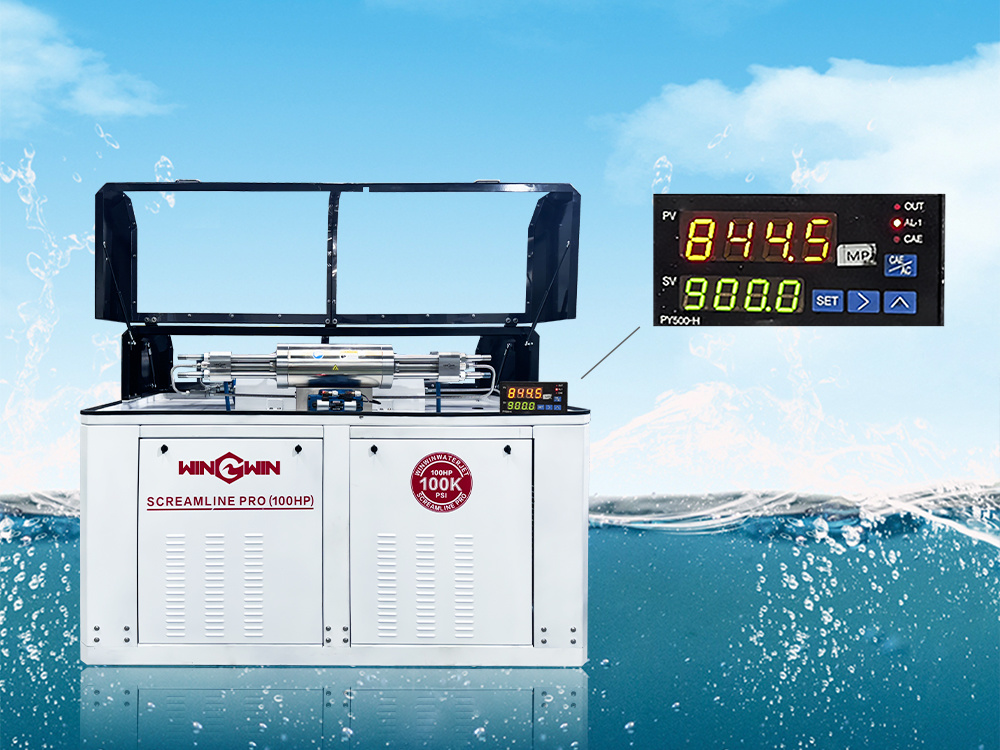
Waterjet Intensifier Pump · 60k – 90k psi

HyperPump · direct drive
Ultra‑reliable waterjet intensifier pump reduces energy cost by 30%. Continuous 24/7 operation.
See our intensifier pumps in operation
Universal retrofit / upgrade
Our waterjet intensifier pump is designed to directly replace pumps on most water jet cutting machines — same footprint, 30% higher efficiency, no plumbing modifications.

Related Products



Online Inquiry

Scan the QR code
Contact us

Email:service@winwinwaterjet.com
Address:63-32 Qixing Street, Shenbei New District, Shenyang City, Liaoning Province


