

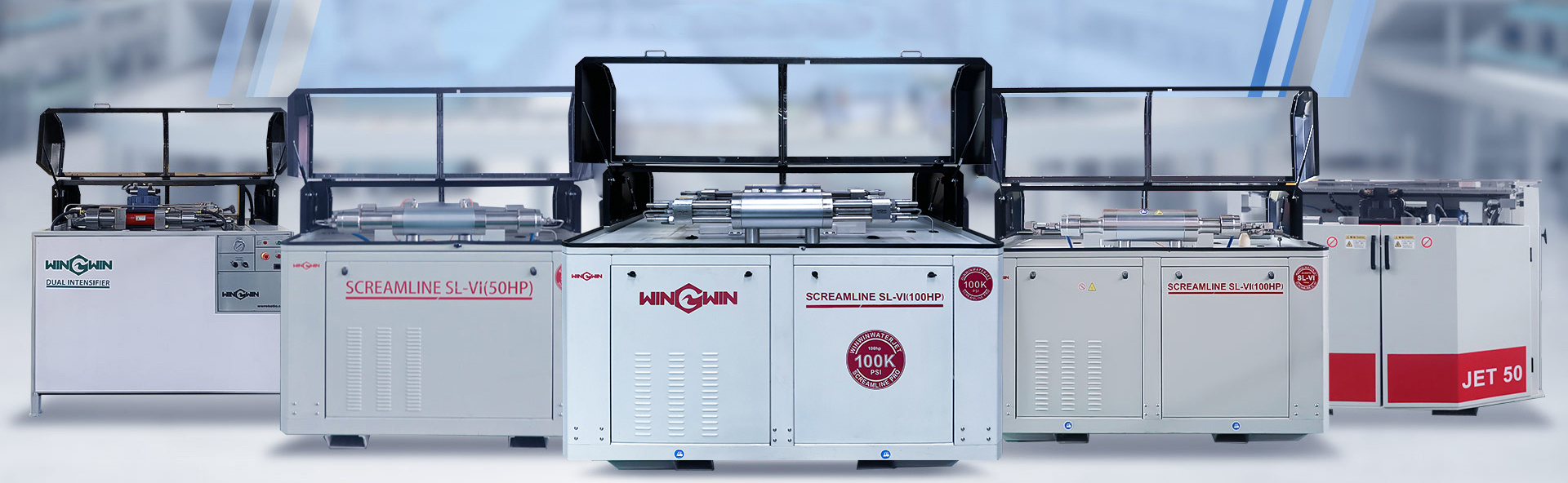
Besides the price of the waterjet cutting equipment, what is the total annual operating cost?
2026-09-10
author:
The annual comprehensive operating cost of a waterjet cutting system typically ranges from $20,000 to $28,000 for a standard 30 HP to 50 HP machine running one shift (about 2,000 operating hours per year). However, this number fluctuates significantly based on your pump pressure, abrasive type, cutting duty cycle, and maintenance discipline. Let me break down the four major cost components so you can estimate your specific situation accurately.
First, electricity accounts for roughly 40–50% of the total annual cost. A 30 HP intensifier pump draws about 30–35 kW under full load. At an average industrial electricity rate of $0.12 per kWh, running 2,000 hours per year costs approximately $7,200 to $8,400 annually. For a 50 HP pump drawing 50–55 kW, that figure jumps to $12,000–$13,200. Direct-drive pumps are slightly more energy-efficient—they can save 10–15% on electricity because they avoid the hydraulic oil losses of intensifier systems. Do not forget the auxiliary loads: the booster pump (3–5 kW), the abrasive feeder (1 kW), and the chiller or cooling tower (3–7 kW) add another $1,500–$2,500 per year.
Second, abrasive garnet is the largest variable expense, often 30–40% of your total. At a typical consumption rate of 0.5 to 1.5 pounds per minute, a 30 HP system uses about 60–100 pounds per hour. At 2,000 hours, that is 120,000 to 200,000 pounds annually. With garnet priced at $0.20–$0.35 per pound (bulk pricing), your abrasive bill ranges from $24,000 to $70,000 per year—yes, this can easily exceed the machine's electricity cost. However, you can cut this dramatically: using a recycler system recovers 60–80% of spent abrasive, reducing net consumption by half. Also, cutting softer materials like aluminum or plastics at lower pressure can drop consumption to 0.3–0.5 lb/min, while hard steel or titanium may push it to 1.2–1.8 lb/min. Always match the abrasive mesh size to your job—finer mesh wastes material on thick sections.
Third, nozzle and high-pressure components are the hidden recurring cost. The mixing tube (carbide nozzle) lasts 80–300 hours depending on abrasive quality and pressure. At $120–$250 each, replacing it 8–15 times per year costs $1,000–$3,800. The orifice nozzle (sapphire or diamond) lasts 300–800 hours and costs $80–$200—annual cost: $400–$1,200. High-pressure seals, check valves, and plungers in the pump require rebuilds every 400–800 hours; a complete seal kit costs $300–$600, and you may need 3–5 kits per year, adding $1,200–$3,000. Water filters and softener cartridges add another $500–$1,000 annually.
Fourth, maintenance labor and downtime are often underestimated. Skilled technicians charge $80–$150 per hour. A preventive maintenance schedule—changing oil, inspecting hoses, cleaning filters—takes 40–80 hours per year, costing $3,200–$12,000 if outsourced, or less if your team handles it. Unplanned breakdowns add 20–50 hours of lost production, which at $100/hour shop rate means $2,000–$5,000 in lost revenue.
To summarize, a realistic annual operating budget for a 30 HP system with garnet recycling is roughly: electricity $9,000, abrasive (with recycling) $15,000, consumables $5,000, and maintenance $4,000—totaling about $33,000 per year**. Without recycling, that number can exceed **$60,000. The most effective way to lower your cost is to install an abrasive recycler, run at the lowest pressure that achieves your required cut quality, and adopt a predictive maintenance program with scheduled seal replacements. Finally, request a customized cost simulation from your supplier—they can input your material, thickness, and shift hours to give you a guaranteed estimate. That is far more reliable than any general industry average.

Scan the QR code
Contact us

Email:service@winwinwaterjet.com
Address:63-32 Qixing Street, Shenbei New District, Shenyang City, Liaoning Province


